

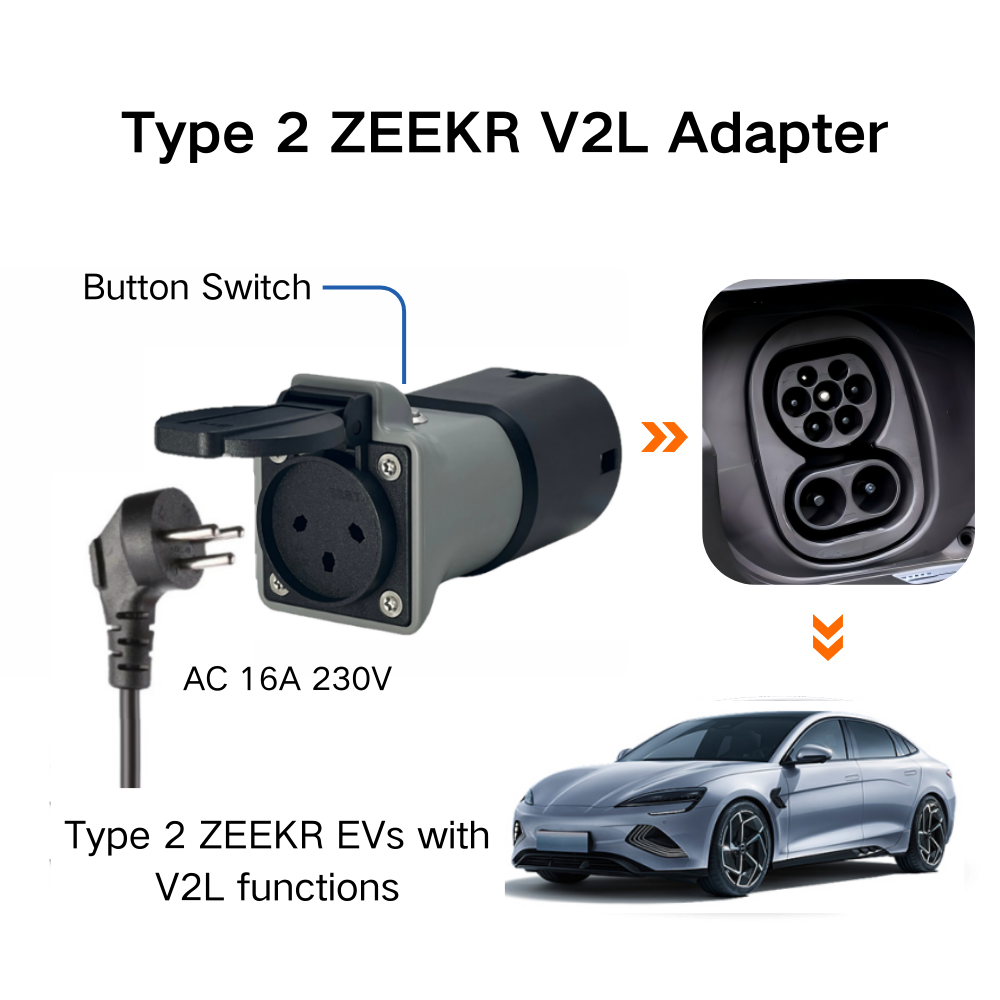
With the increase in popularity of Vehicle-to-Load (V2L) technology among the owners of electric vehicles, it is necessary to learn about the safety issues of V2L adapters. Such devices can turn your EV into a portable power generator, yet the misuse of the gadget or low-quality items can be very dangerous. In Aotai Technology Co., Limited, safety is a priority in all products that we produce. Here is the guide to the main standards of safety and protection features, as well as compatibility aspects of which you should know.
Why V2L Adapter Safety Matters
V2L adapters are used with high voltage electricity that is pulled off your EV traction battery which is usually between 200V and 800V. Any insulation, connectivity or protection failure may cause electric shock, fire risks or damages to your car. The selection of a certified well-designed adapter has not only a convenience issue associated with it but also a life and death issue.
International Safety Standards to Look For
Approved V2L adapters are made to meet the existing international standards. Through these certifications, the product has been subjected to intense electrical safety, thermal performance and durability.
European Standards (IEC/EN): The standard IEC 61851 or EN 62196 series means that the EV conductive charging system requirements, such as plug, socket and adapter safety are met.
American Standards (UL): EV charging equipment safety such as overcurrent safety and insulation integrity is subject to UL certification, most typically UL 2251 or UL 2594.
Japanese Standards (JIS): The safety requirements of EV connectors and adaptors in the Japanese market are controlled by JIS D 5305 or some similar standards.
The newest V2L adapters and charging connectors of the Aotai Technology are European, American and Japanese standards and grant the global purchasers certified and reliable safety performance.
Essential Protection Features
A quality V2L adapter must have many layers of protection to cover the user as well as the vehicle itself. The following features are to be sought:
Overcurrent Protection: The overcurrent protection automatically switches off the power supply when there is excess of current to prevent overheating and fire prone situations.
Overvoltage and Undervoltage Protection: Monitors voltage on inputs and outputs of equipment in order to provide constant supply of power to equipments, preventing spikes or drops caused by fluctuations in voltage.
Short Circuit Protection: It automatically shuts off power immediately upon short circuiting such that electrical fire or component damage is limited to a minimum.
Temperature Protection: In-built thermal sensors will sense the excessive amount of heat as well as warn of shutdown before the adapter or connectors become hot.
Ground Fault Detection: Is used to detect leakage currents that might be evidence of failure of insulation, and is automatically turned off to avoid electric shock.
IP Rating for Weather Resistance: An Ingress Protection (IP) like IP54 or above rating means that it can resist dust and water splashes, which is necessary when being used outdoors when camping or in an emergency.
We also incorporate such protection in our V2L adapters at Aotai with the help of high-end product testing equipment and experimental facilities to guarantee stable operations.
Compatibility: Matching the Adapter to Your EV
Another aspect of the V2L that will ensure safety is matching correctly with your electric car. An incompatible adapter may cause inadequate electrical contact, malfunction in communication and even destruction of the charging port of the vehicle.
Connector Type: Determine whether your EV has Type 1 (J1772) or Type 2 (CCS), or CHAdeMO. Aotai also sells V2L adapters which support Type 1 and Type 2 interfaces, so that it is compatible with most brands worldwide, including BYD, MG, Kia, Hyundai and beyond.
Vehicle V2L Support: EVs do not have all the support of V2L. Make sure that your car model has V2L capability, whether embedded in the vehicle or as an external add-on by referring to your owner manual or motorist.
Power Rating Matching: To match the maximum power rating (such as, 2.2 kW, 3.5 kW) of the adapter with the V2L of the vehicle, you must calibrate the output of your terrible vehicle to be able to do this. Overspeeding may result in a vehicle safety shut-down or even a stressful electrical state.
Quality Assurance and Manufacturing Excellence
In addition to certifications and features, the process taken by the manufacturer in control of quality is instrumental in the safety of the product. Aotai Technology has a 2,000-square-meter factory that was built on a standard basis and has 13 years of professional experience. Our sophisticated manufacturing, stringent quality control measures and experienced personnel force transforms all V2L adapters to high-spec, high-precision, and high-reliability ones.
Proper Usage and Maintenance Tips
Even the V2L adapter which is the safest to use, still must be used correctly to achieve safety:
Inspect before use: Check for any obvious damage to the cables, connectors or housing.
Avoid overloading: Do not use an adapter over its power capacity.
Use in dry conditions when possible: It can be used even in rainy seasons but not in flooding situations.
Store properly: Do not leave the adapter in a moist area when not in operation in order to avoid the wear and contamination.
Summary
Choosing a V2L adapter is not a functional choice but a safety choice which will impact you, your car and the devices with which you communicate. With careful selection of an item that is up to international standards, offers a comprehensive protection abilities as well as making sure that it is compatible properly you can take the convenience of V2L power and be fully at ease.